Performance research
Across a 15-day window, one participant's own WHOOP data was compared before and during AOI sessions. Recovery, heart-rate variability, resting heart rate and sleep all improved — even through a stretch of real-life stressors.
Average recovery
74%
from 56% · +32%
Average HRV
39 ms
from 34 ms · +15%
Resting heart rate
56 bpm
from 60 bpm · −4 bpm
Green recovery days
8
from 2 · 4× more
Baseline vs AOI period
| Metric | Baseline | AOI period | Change |
|---|---|---|---|
| Average recovery | 56% | 74% | +18 pts (+32%) |
| Average HRV | 34 ms | 39 ms | +15% |
| Average RHR | 60 bpm | 56 bpm | −4 bpm |
| Sleep consistency | 65–75% | 84–93% | Significant |
| High recovery days | 2 | 8 | 4× increase |
| High strain days | 4 | 5 | Similar load |
Despite a similar — or higher — training and lifestyle load, recovery outcomes improved substantially.
Through real stressors
It held up where recovery usually drops.
Several events during the AOI window would normally be expected to lower recovery. They didn't.
Menstruation
Recovery stayed predominantly green rather than trending to prolonged yellow or red.
Alcohol + late bedtime
After a red recovery day, alcohol and a late night still rebounded to ~89–90% the next day.
Moving house
A physically demanding move brought fatigue and high activity — with no prolonged suppression of recovery.
General life stress
Stress was present throughout, yet recovery, HRV, sleep and RHR kept improving rather than declining.
The data
Straight from WHOOP.
Captures are the participant's own WHOOP app — recorded independently, not endorsed by WHOOP.
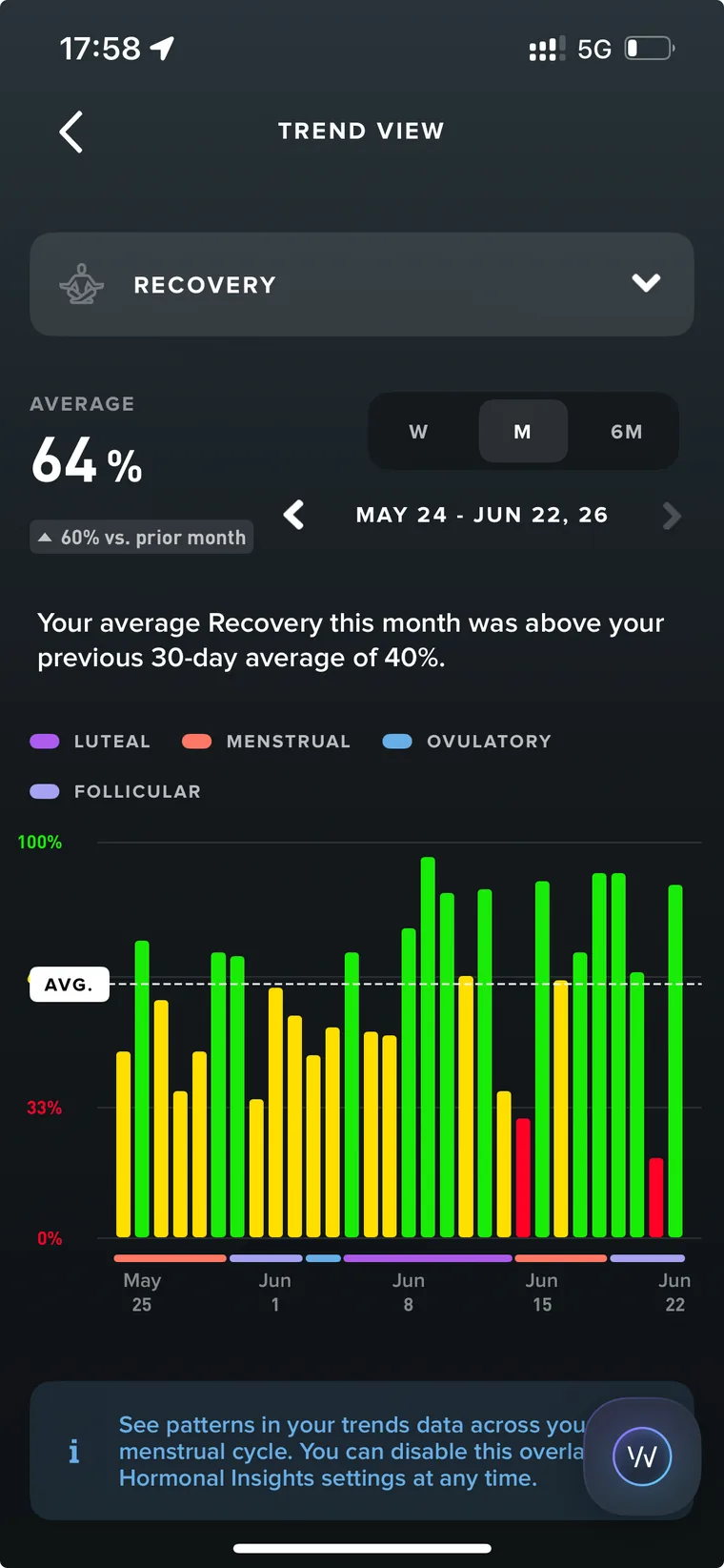
30-day recovery average climbed from 40% to 64%. 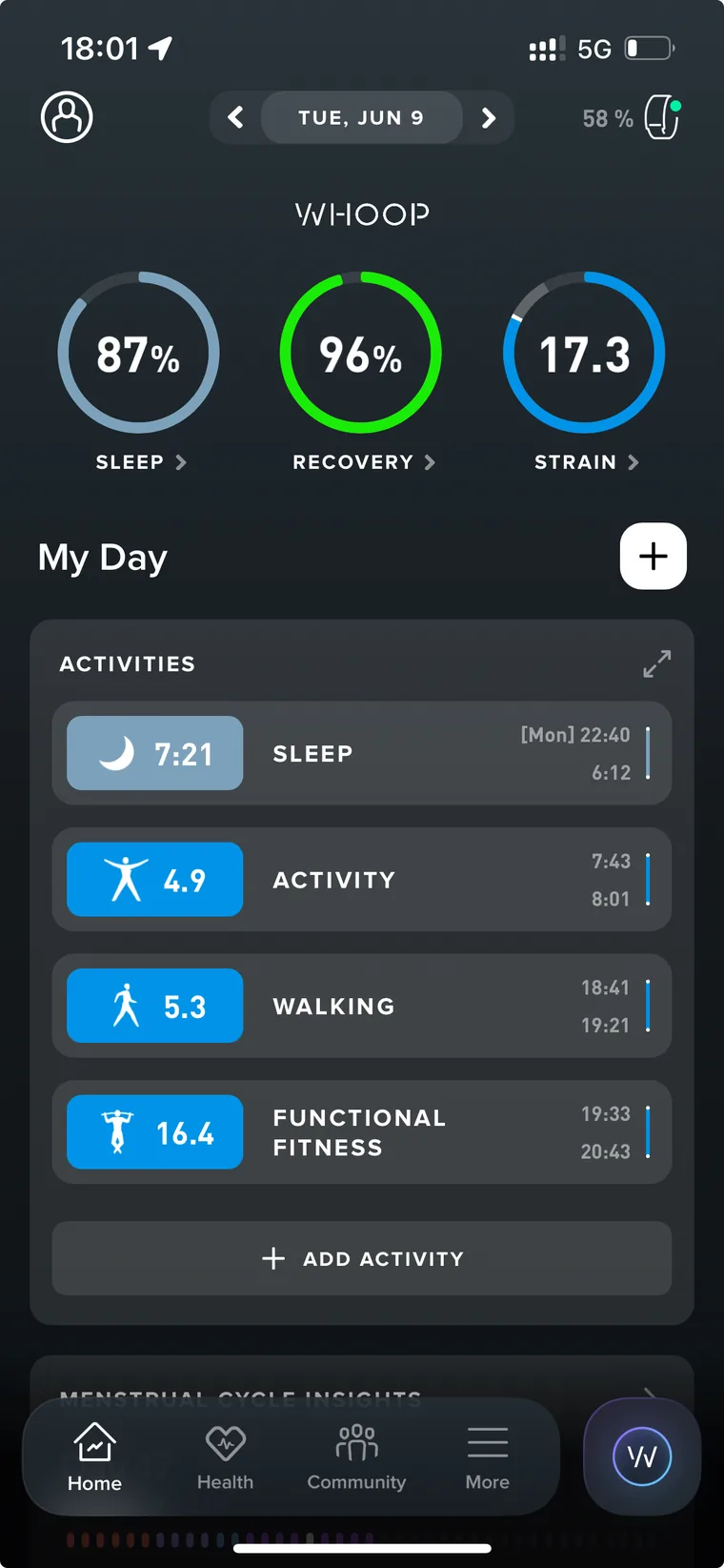
Peak recovery — 96%, even after a high-strain day (Jun 9). 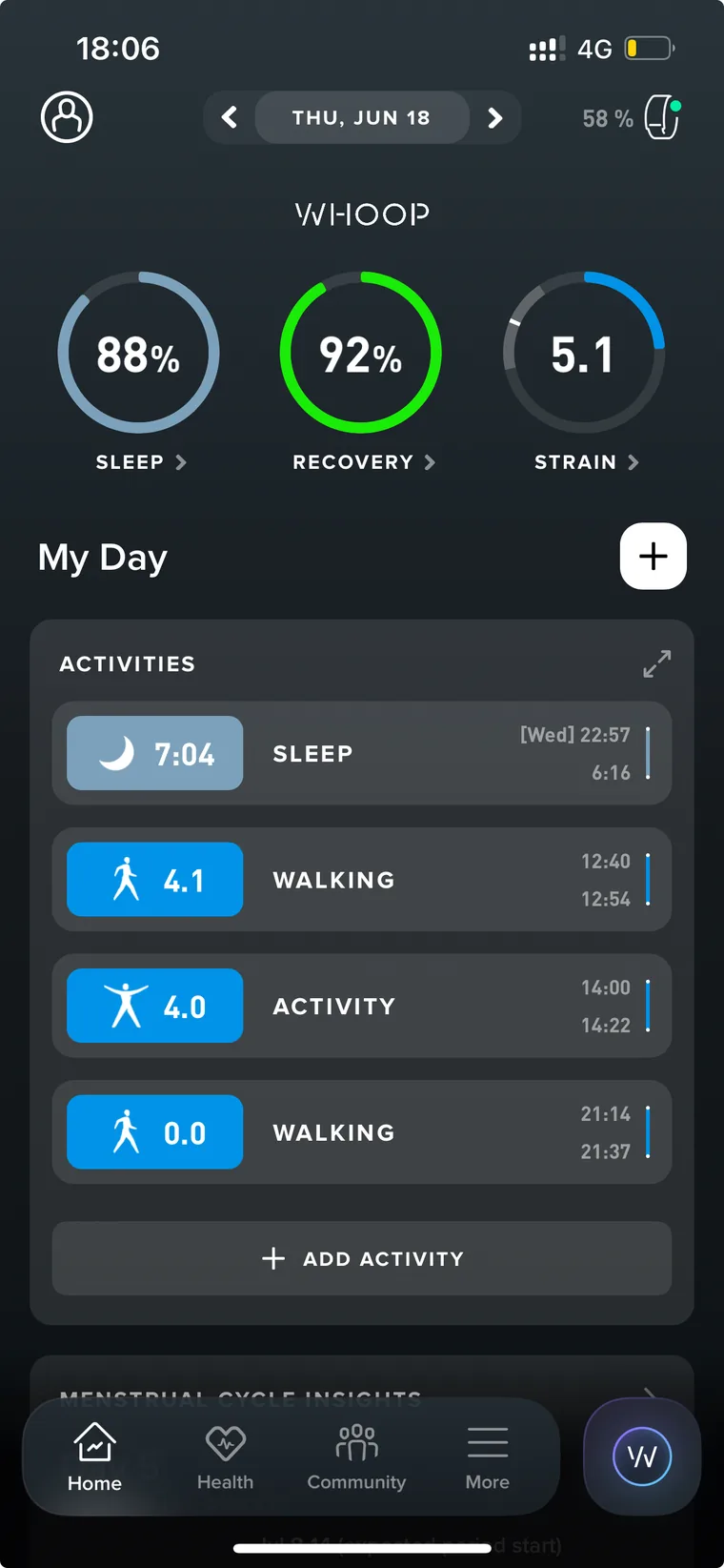
92% recovery on 88% sleep (Jun 18). 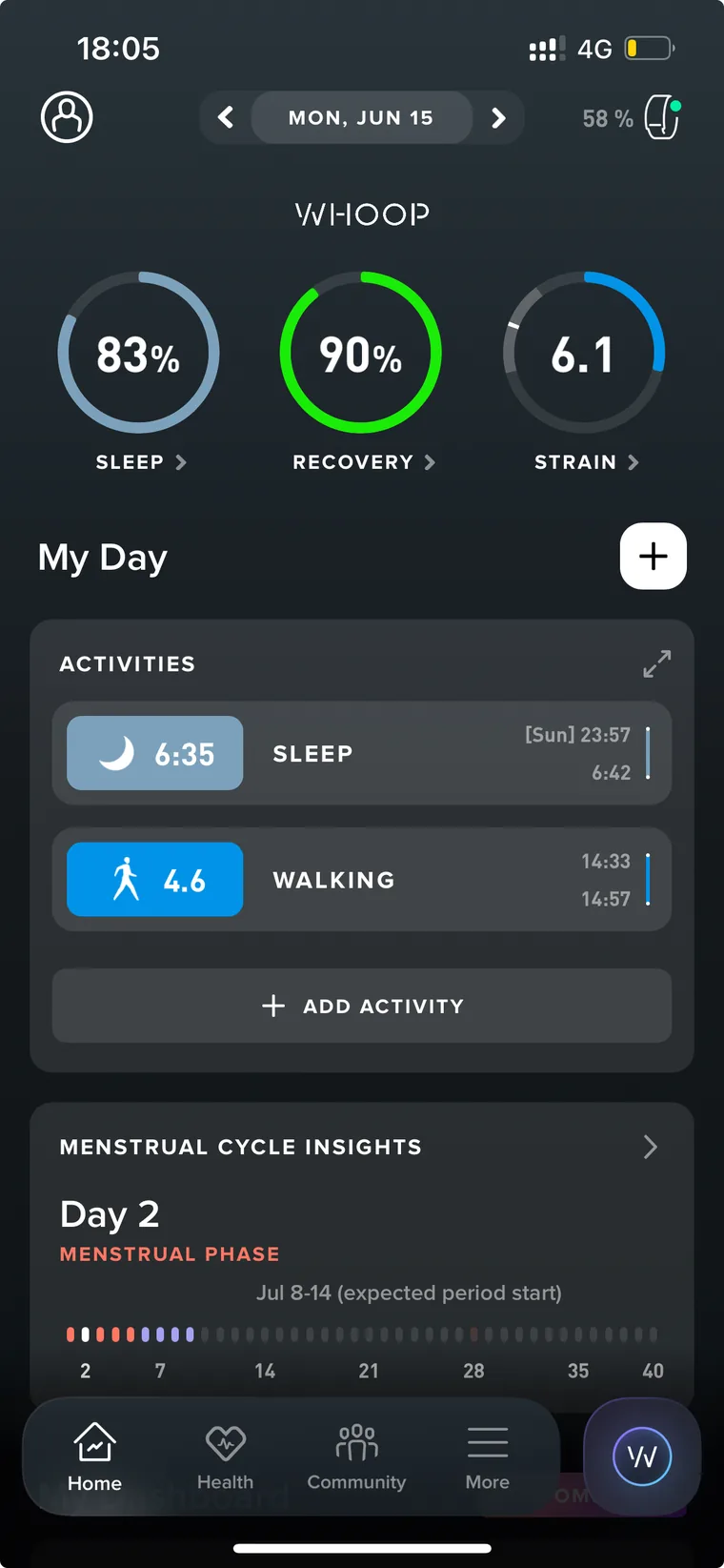
90% recovery — fully recovered and ready (Jun 15). 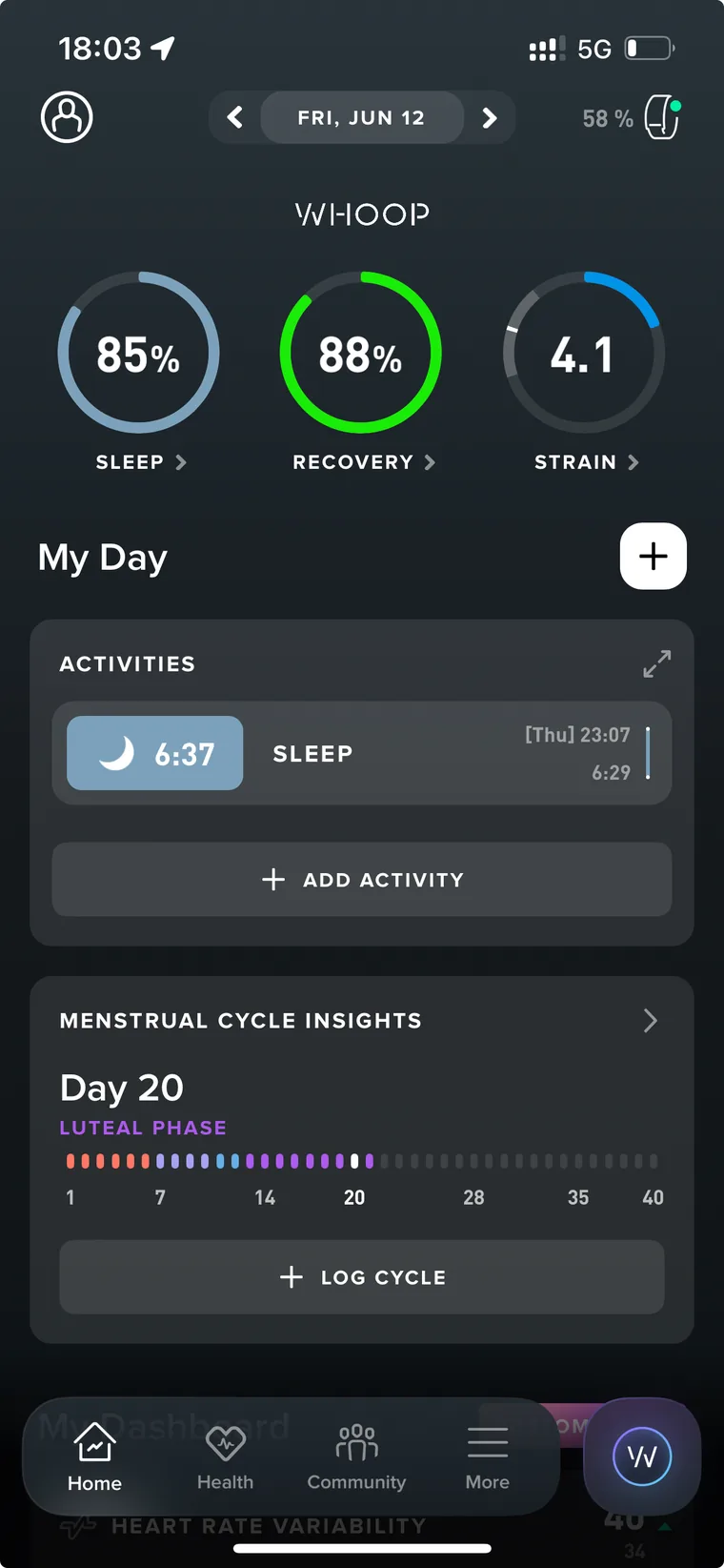
88% recovery on 85% sleep (Jun 12). 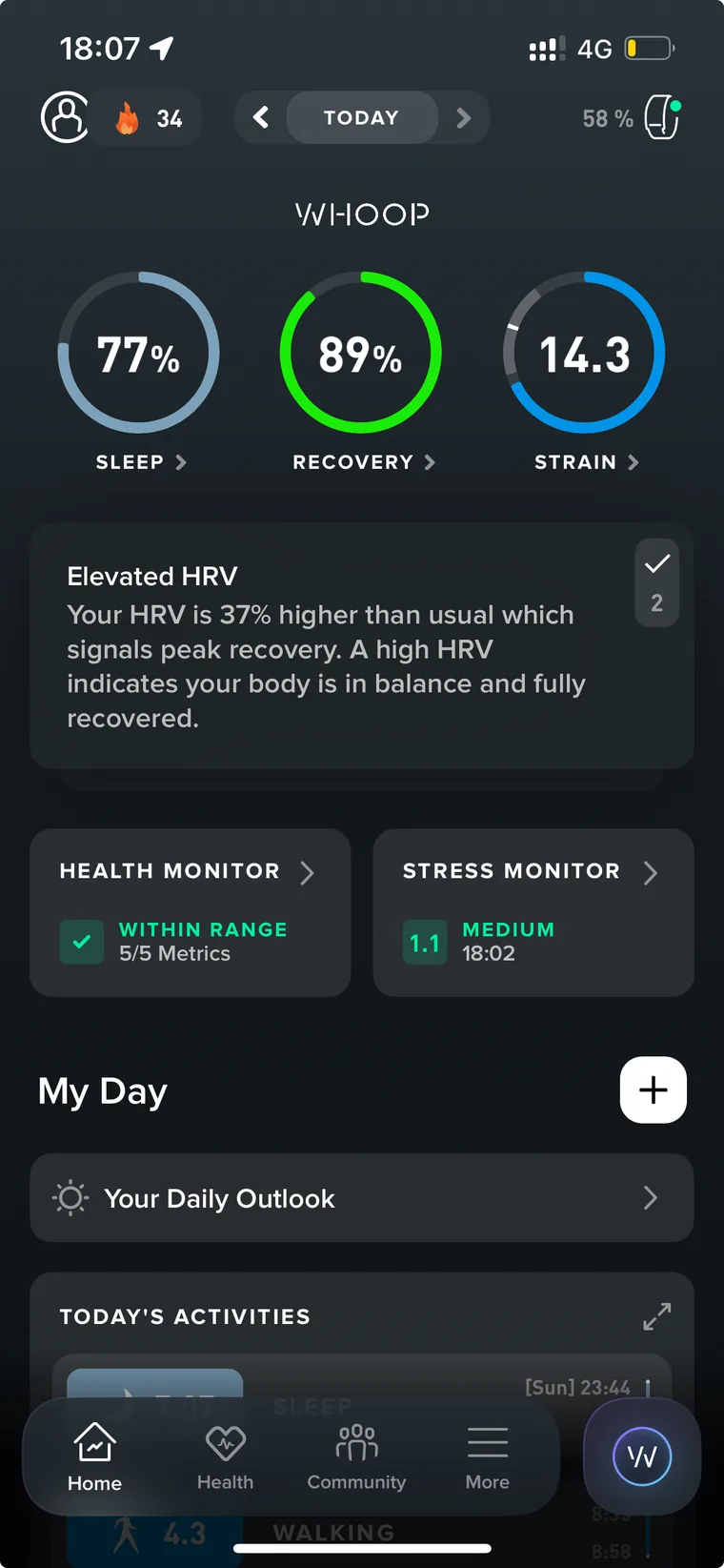
Elevated HRV — 37% above the participant's usual (Jun 22). 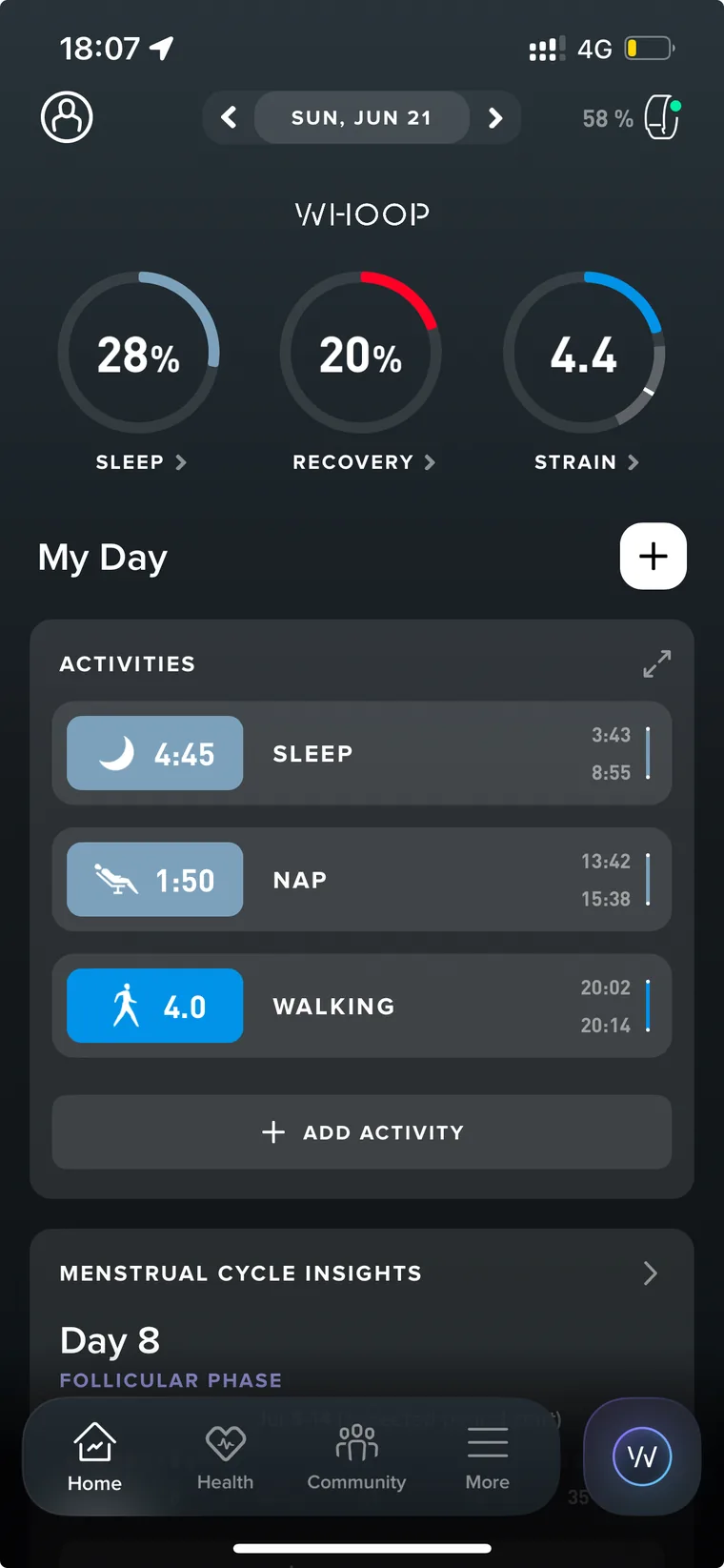
An honest low: 20% recovery after a poor night (Jun 21). 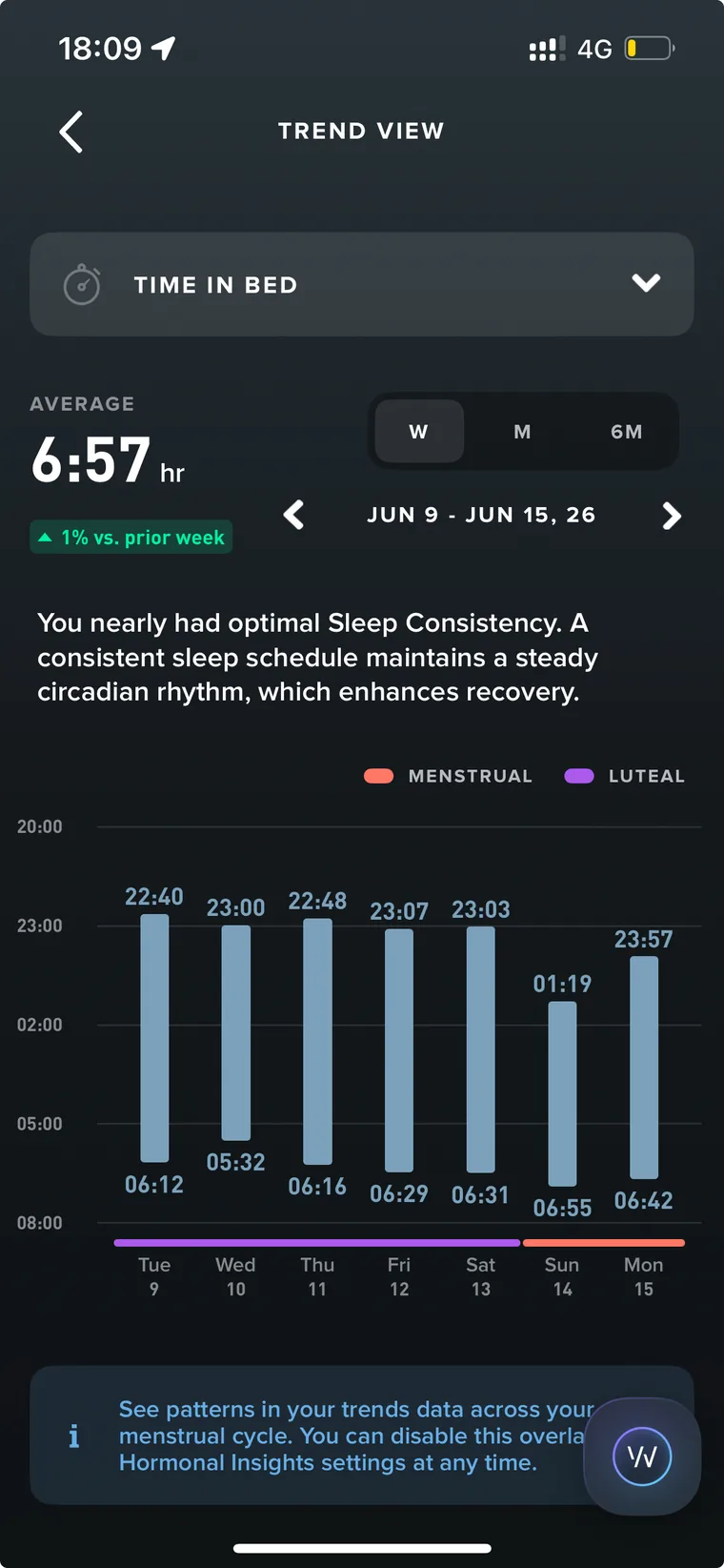
Consistent sleep — around seven hours in bed each night. 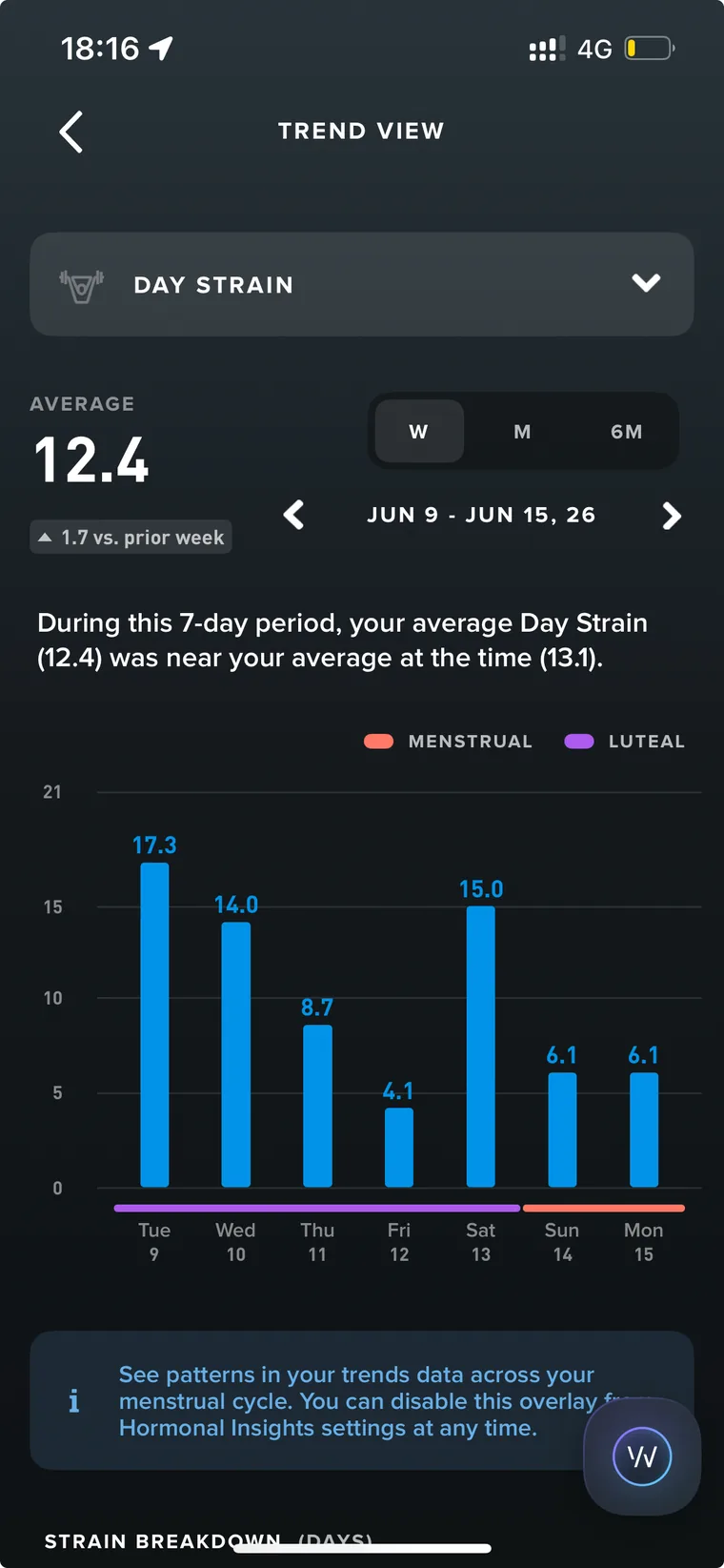
Training stayed active — average daily strain 12.4. 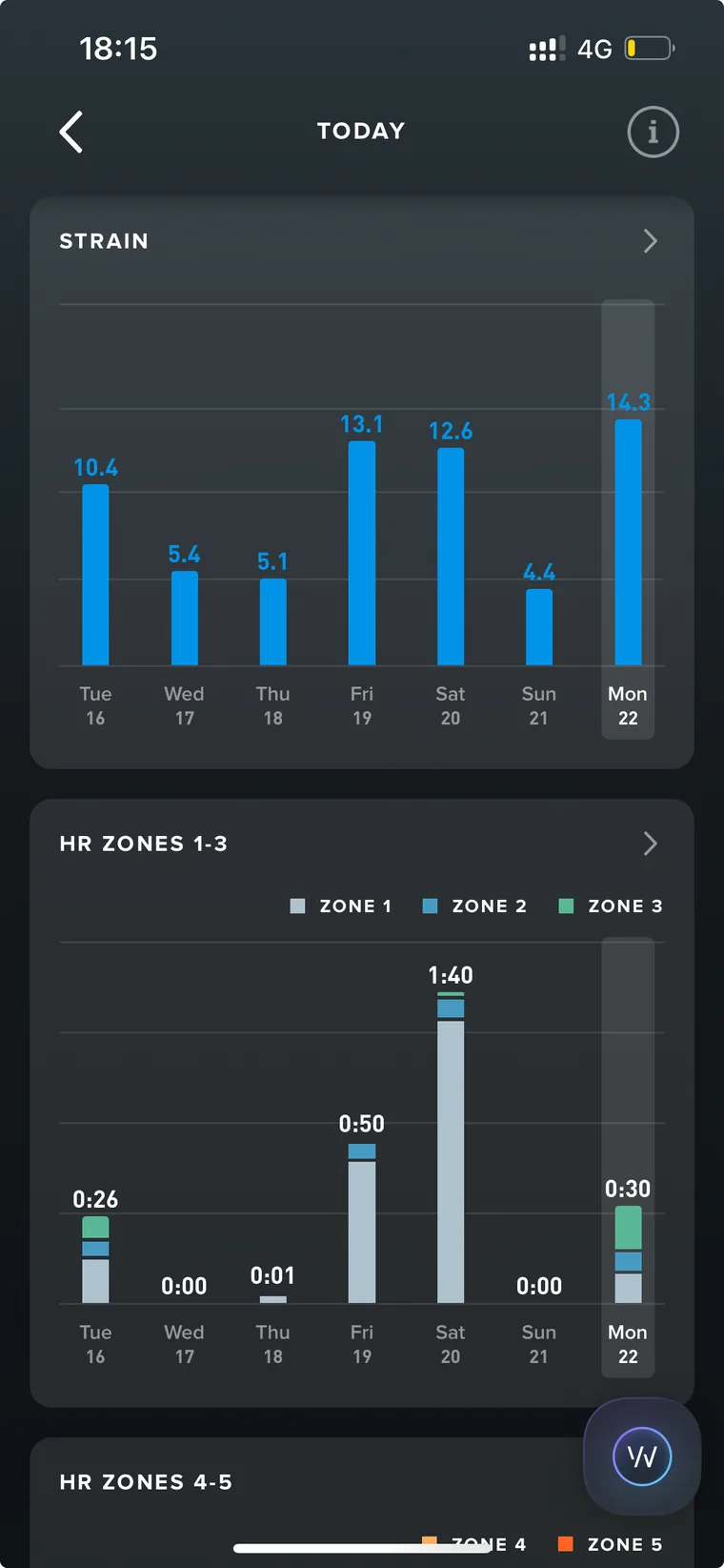
Daily strain and heart-rate zones across the week. 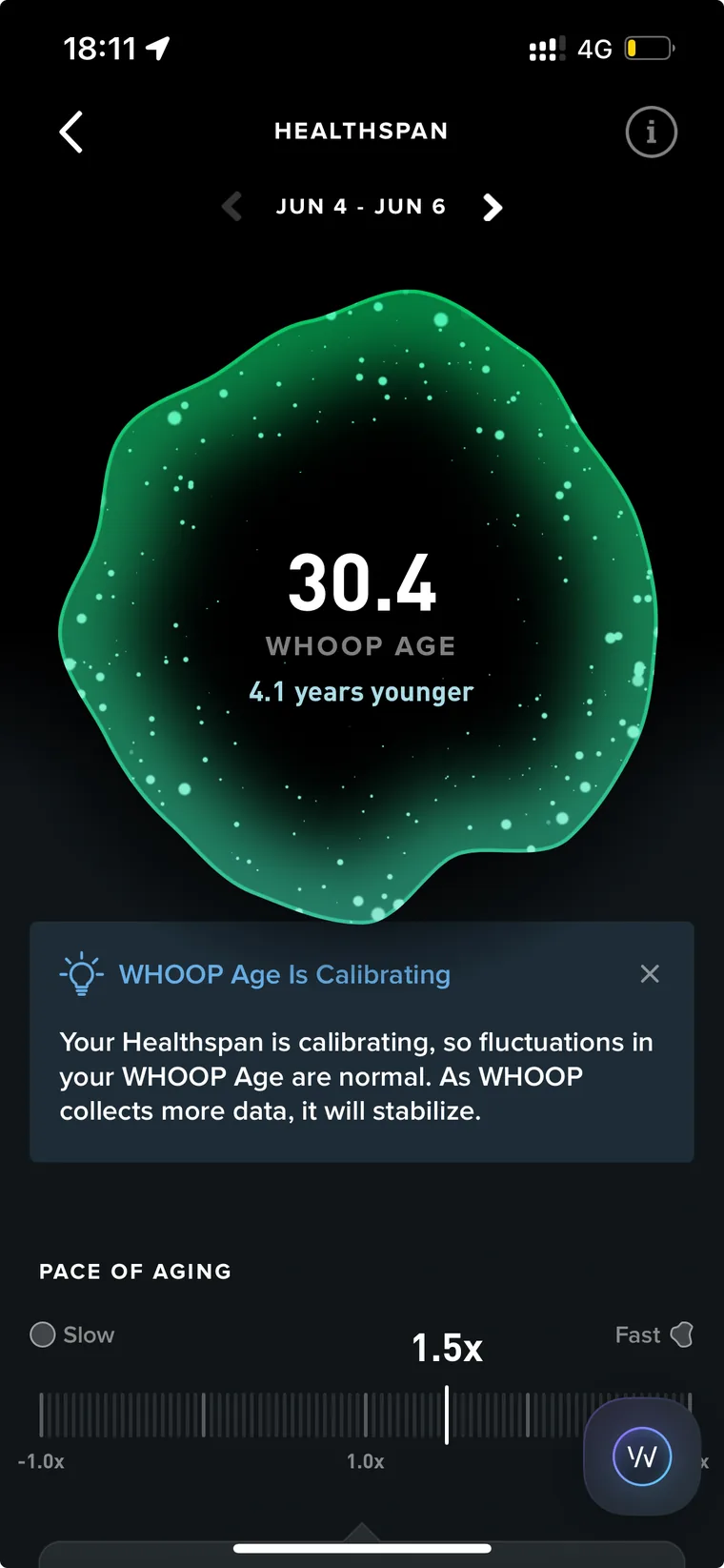
WHOOP's experimental Pace-of-Aging metric, near the start (calibrating). 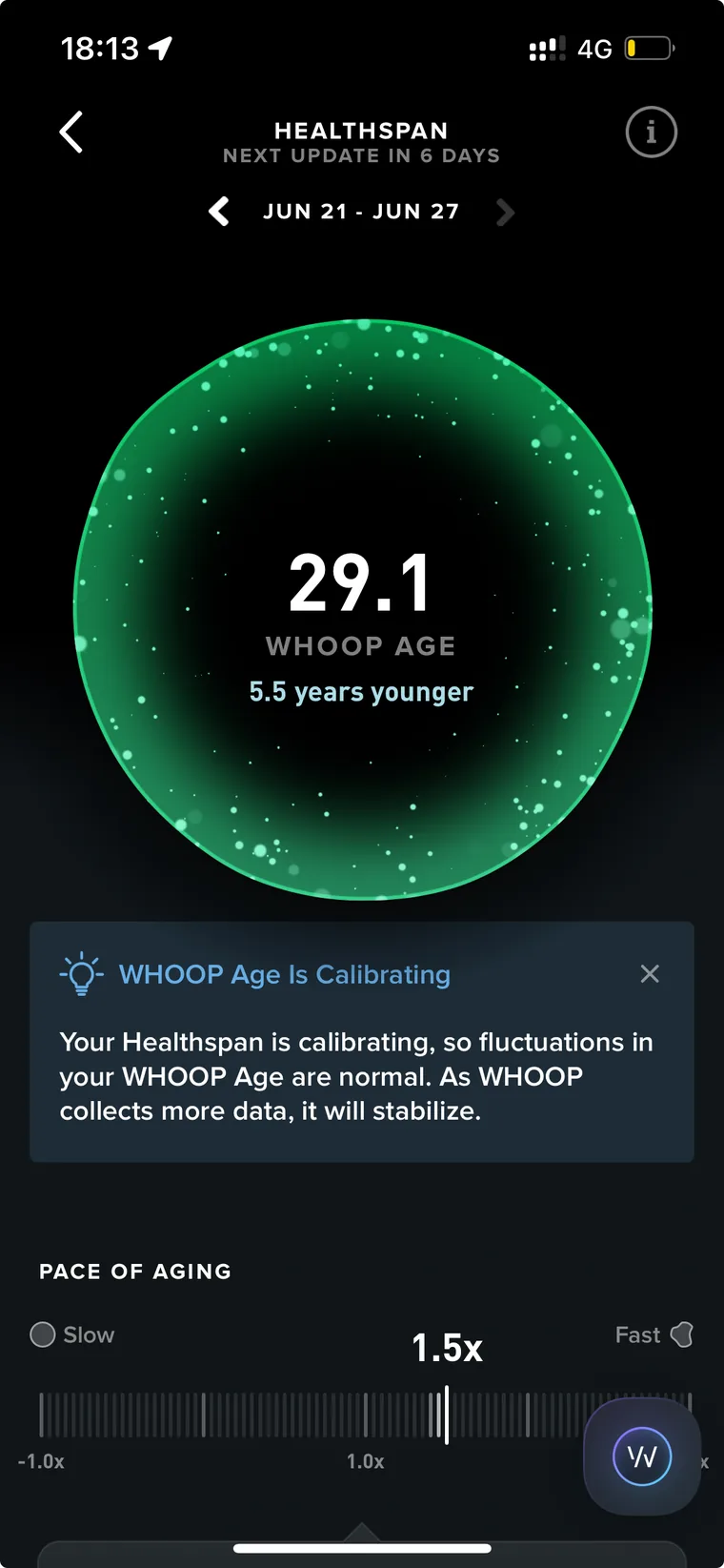
Pace-of-Aging trending down across the window (calibrating).
In summary
A clear shift toward better recovery.
Compared with baseline, the AOI window was associated with higher recovery scores and HRV, a lower resting heart rate, better sleep consistency, improved resilience to strain, and faster recovery after physiological and psychological stressors.
Most notably, recovery stayed elevated through menstruation, physical fatigue, alcohol, late bedtimes and general life stress — conditions that historically would have been expected to reduce it.
This is a single-subject observation, so it cannot establish causation. But the objective WHOOP data is consistent with a potentially beneficial effect of AOI on nervous-system regulation, recovery capacity, sleep quality and physiological resilience.
Preliminary results from a single-subject, observational comparison (June 2026) — one participant's own WHOOP data over a 15-day window. A single observation cannot establish causation, and individual results vary. WHOOP is a trademark of WHOOP, Inc., which does not endorse AOI; the captures are the participant's own data. AOI is a wellness practice, not a medical device, and does not diagnose, treat, cure or prevent any condition — this is not medical advice.